Sunday, November 29, 2020

If Voltaire called shotgun.

 I often think about the notion of "aristocracy", comparing what we think of it in historical terms and what is required to 'qualify' for that status now. We don't have a structural class system that might include 'the nobility', but how might that compare to societies of the past that did?

I don't know where the title of 'marquis' fit in the grand scheme of French nobility, but that was the title that Voltaire held until his death. 

https://en.wikipedia.org/wiki/Voltaire#Name.  Voltaire may have been an anagram of AROVET LI, the Latinized spelling of his surname, Arouet, and the initial letters of le jeune ("the young"). According to a family tradition among the descendants of his sister, he was known as le petit volontaire ("determined little thing") as a child, and he resurrected a variant of the name in his adult life.

What if Voltaire (or le Chevalier de St. George) were in the passenger seat of the Nissan Leaf I was driving tonight? What if, instead of handing the wad of bills I gave to the girl panhandling under the overpass of 45, it was Jean Valjean? What if it was Rousseau or Voltaire that I picked up? Imagine Voltaire in an electric car in 2020. Not only is it freakily quiet, but the torque will throw your head to hit the headrest if the ECO mode isn't on.  65 mph is probably 3 times faster than a carriage ever carried Voltaire anywhere - and that would have involved at least 2 horses and a carriage that would have rattled the cobblestones. My Leaf would seem like a spaceship to anyone from 200 years ago. 

I calmly took the ramp that takes me over Parmer (at 65 mph) when Carol called (interrupting the "Chainsmokers with ColdPlay" https://youtu.be/FM7MFYoylVs. Our conversation would have sounded foreign - even if he understood English:

(C) - What was the size of filter I was supposed to get?"

(R) - I got them at Wal-Mart.

(C) - So you don't know.

(R) - It's 18 by 24 and I got them at Wal-Mart.

(C) - OK, bye.

This conversation came over the car's audio system as I was taking the off-ramp at 100 kilometers/hour and changing lanes. 

What would a "nobleman" - a member of the aristocracy from 200 years ago, have thought of these few seconds which, to me, could have been totally mundane? Would I have appeared as some sort of advanced alien?

We have electric appliances that can do the work of several servants from years ago. We have unbelievably easy access to information that was unknown even 100 years ago. We are all taller, stronger, healthier, more technologically advanced than kings of old.  

All that, of course, leads to a consideration of the nature of wealth. If 'wealth' is relative, then what is its relativity compared to? Is my wealth compared only to my contemporaneous peers, or could it be compared with my 'relative' peers from centuries past?

Did King Louis XIV ever talk to his queen through wireless communication in his carriage, travelling at a speed faster than 100 horses could have carried him? Did that king have the ability to control the temperature, humidity, and cleanliness of his castles? Was that king capable of learning Mandarin Chinese without hiring a tutor?

How much richer am I than the richest mother fucker 200 years ago? Put that into perspective for a second.


Saturday, November 23, 2019

Spies Like US


Whether you're a fan of the HBO series "The Americans" or not, it's relevant to know what true story it's actually based on.  This story is not ancient history - this happened in 2010.

This is the mug shot of "Anna Chapman"


https://en.wikipedia.org/wiki/Anna_Chapman
Anna Chapman was a Russian intelligence agent who was arrested in the United States on June 27, 2010 as part of the Illegals Program spy ring.  She and the other Russians were deported to Russia on 8 July 2010, as part of the 2010 Russia–U.S. prisoner swap.

Since her return to Russia, Chapman has become a media personality and model and has worked in a variety of fields, including for the government as head of a youth council, a catwalk model in Russian fashion shows, and running a television series.


https://en.wikipedia.org/wiki/Illegals_Program
The Illegals Program (so named by the United States Department of Justice) was a network of Russian sleeper agents under non-official cover. An investigation by the Federal Bureau of Investigation (FBI) culminated in the arrest of ten agents on June 27, 2010, and a prisoner exchange between Russia and the United States on July 9, 2010.

The ten sleeper agents were charged with "carrying out long-term, 'deep-cover' assignments in the United States on behalf of the Russian Federation."

These were 10 who were caught.  It's unknown how many more were involved or may still be involved.  However, simply in terms of ROI (Return On Investment), it was a highly ineffective program.  The spies were bumbling (like the movie), were bored, and weren't returning much intelligence.  Keep in mind, though, that Russia did not just give up on espionage.  They simply found better, more effective methods.

Friday, November 22, 2019

How do you solve a problem like Marie Ya-?


So, did you ever wonder why Marie Yovanovich was suddenly removed as ambassador to Ukraine?  
Do you remember these two whom the FBI arrested last month?


Parnas and Fruman, two members of President Donald Trump’s legal team, were arrested for campaign-finance violations while apparently trying to flee the country. According to the indictment, Parnas and Fruman allegedly laundered money through a pro-Trump 2020 political action committee while lobbying for the removal of US Ambassador to Ukraine Marie Yovanovitch—who was indeed removed in May.


Parnas and Fruman started a new natural gas venture and were trying to swing a deal with Naftogaz, Ukraine’s state run oil and gas company, where they would export liquefied natural gas.  Naftogaz wasn’t interested, not least because Parnas and Fruman had no experience in the energy industry.  So Parnas and Fruman started to push for Naftogaz to change its board, replacing executives with ones who would go along with their schemes.  While they were doing that, Rich Perry was trying to get one of his favorites installed on the same board. 

The board of Naftogaz is controlled by the Ukrainian president, and has a number of seats filled by representatives from the U.S. and the EU (to prevent corruption).  To get their deal, they needed to change the board, specifically the US members of the board. In order to do that, they needed the Ukrainian president and the US government to agree, especially the US ambassador, Yovanovich. But Yovanovich is a professional diplomat whose role was to fight corruption in Ukraine, not promote it.  She opposed their plan.  So, Parnas and Fruman plotted to get her removed.  

Lutsenko worked with Parnas and Fruman  to get Yovanovich removed.  To push this plan, they had several meetings with Pete Sessions, lobbying him for Yovanovich’s removal.  Sessions wrote the letter to the Trump administration that started the smear campaign against Yovanovich. What did Sessions stand to gain from that (besides money?) https://www.dallasnews.com/news/politics/2019/11/15/former-dallas-rep-pete-sessions-considered-as-yovanovitchs-ukraine-replacement-as-he-urged-her-removal-report-says/

Remember where Parnas and Fruman were going (with one-way tickets) when they got arrested.  Remember that Giuliani was heading there soon afterwards.  Who is under arrest and out on bail in Geneva, fighting extradition to the US? 
Trump has already begun trying to distance himself from Parnas and Fruman, telling reporters he doesn’t know the two men who’ve taken photos with him dating back to at least 2014, dined with his son, and worked closely with his personal lawyer on the president’s personal project. But with Giuliani reportedly under investigation as well for his business with the duo, it’s clear that Trump won’t be able to run away from the evidence of his corruption for long.

Thursday, November 21, 2019

Know your Russia sanctions

As the impeachment inquiry continues, I think it's important to understand what these sanctions are all about.  Why? Because if you know WHAT Putin really doesn't like and really wants removed, you may start to understand WHY someone is pushing for some of the things he's pushing for. 

It is not my intention here to sway anyone's opinion, but rather to inform with background information.  I trust in our ability to continue to use our logic and judgement.

2012 - The  Magnitsky Act - sanctions on those who have committed human rights abuses.

March 2014 - for the invasion of Crimea -  sanctions, including travel bans and the freezing of U.S. assets.  Russia kicked out of G8.

April 2014 - for the invasion of Ukraine - Europe suspended the Russia's voting rights. The U.S. imposed a ban on business transactions on 7 Russian officials, including Igor Sechin, chairman of Rosneft (Russian state oil company).

July 2014 - for shooting down the Malaysian airliner - the U.S. bans all transactions with two major Russian energy firms, Rosneft and Novatek.

December 2016 - for election interference - sanctions on Deripaska, a Russian billionaire with ties to Paul Manafort, from the U.S. financial system for being part of Russian President Vladimir Putin's inner circle.

August 2019 - for attempting to assassinate Skripal and daughter on U.K. soil - US banks are now banned from providing loans to Russia, and Washington will also be opposing any loan extension to Moscow by international institutions.

https://en.wikipedia.org/wiki/International_sanctions_during_the_Ukrainian_crisis
https://fas.org/sgp/crs/row/IF10779.pdf

If you want, I challenge you to research for yourself any of the following:

  • Who is advocating for Russia to be readmitted to the G8?
  • Who is trying to give Crimea to Russia?
  • Who is promoting the notion that Ukraine, not Russia, interfered in the 2016 elections?
  • Who benefits from any of these things happening?  Which of these are in the U.S. interest?  Which of these are in Russia's interest?


Tuesday, November 19, 2019

Trump's personal lawyer in Ukraine

Yes, but not that one.  It seems this "drug deal" with Giuliani isn't the first time Trump's personal lawyer has been involved with politics in Ukraine.  In 2017, Michael Cohen was meddling in much the same way and in exactly the same role as Trump's personal lawyer.

Take a look at this New York Times article from February 2017.  Also note the context of two critical phrases in it:

  • "...The amateur diplomats..."
  • "...the diplomatic freelancing..."

When Trump became president, Poroshenko was president of Ukraine.  President Obama had imposed sanctions against Russia for invading eastern Ukraine.  Putin and all pro-Russian actors really wanted those to be removed.

A week before Michael Flynn resigned as national security adviser, Cohen hand-delivered a sealed proposal to his office, outlining a way for Trump to lift sanctions against Russia by establishing peace with Ukraine.  If Russia and Ukraine were no longer technically at war, then there would be no need for sanctions.  All they wanted in return was for Lutsenko to drop the Ukranian investigation into Paul Manafort.

Cohen has a personal connection to Ukraine: He is married to a Ukrainian woman and once worked with relatives there to establish an ethanol business.

Before the plan could be considered, Flynn was forced to resign and was convicted of lying about his own discussion of sanctions with the Russian ambassador. It was Comey's refusal to drop the investigation against Flynn that prompted Trump to fire him, bragging about it the day after with the same Russian ambassador that Flynn had been talking to.  At a time when Mr. Trump’s ties to Russia, and the people connected to him, are under heightened scrutiny — with investigations by American intelligence agencies, the F.B.I. and Congress — some of his associates remain willing and eager to wade into Russia-related efforts behind the scenes.

"The amateur diplomats say their goal is simply to help settle a grueling, three-year conflict that has cost 10,000 lives. 'Who doesn’t want to help bring about peace?' Mr. Cohen asked."

But the proposal contains more than just a peace plan. Andrii V. Artemenko, the Ukrainian lawmaker, who sees himself as a Trump-style leader of a future Ukraine, claims to have evidence — “names of companies, wire transfers” — showing corruption by the Ukrainian president, Petro O. Poroshenko, that could help oust him. And Mr. Artemenko said he had received encouragement for his plans from top aides to Mr. Putin.

The two others involved in the effort have somewhat questionable pasts: Mr. Sater, 50, a Russian-American, pleaded guilty to a role in a stock manipulation scheme decades ago that involved the Mafia. Mr. Artemenko spent two and a half years in jail in Kiev in the early 2000s on embezzlement charges, later dropped, which he said had been politically motivated.

While it is unclear if the White House will take the proposal seriously, the diplomatic freelancing has infuriated Ukrainian officials. Ukraine’s ambassador to the United States, Valeriy Chaly, said Mr. Artemenko “is not entitled to present any alternative peace plans on behalf of Ukraine to any foreign government, including the U.S. administration.”


https://www.politico.com/story/2018/05/18/mueller-russia-probe-ukraine-peace-plan-white-house-trump-598034
https://www.vanityfair.com/news/2018/06/victor-vekselberg-michael-cohen-andrii-artemenko-russia-ukraine
https://themoscowproject.org/collusion/sater-cohen-ukrainian-politician-bring-flynn-peace-plan/

Sunday, November 17, 2019

You're E. Lutsenko

The Ukranian Prosecutor General that Giulani would have been talking to was Yuryi Lutsenko, who got the office after Shokin resigned.  Lutsenko did not agree to revisit the investigations into the Burisma, which is probably why Trump asked Zelensky to put Shokin back in.


Watch this short interview -

Ex-Ukraine Prosecutor Says He Spoke With Rudy Giuliani 'Maybe 10 Times'

Something is said in the first 30 seconds of that segment.  A Prosecutor General with "no legal training"?  Well, not exactly.  Lutsenko does have some "legal experience" in that he was sentenced to four years in jail for embezzlement and abuse of office while he was Interior Minister. He was pardoned in 2013 by Viktor Yanukovych.

In 2016, the Ukranian parliament appointed Lutsenko Prosecutor General of Ukraine, but only after it passed legislation allowing a person to hold the office without a law degree. He had been demanding this position since 2007.

This is the Prosecutor who claimed that Marie Yovanovich gave him a "do not prosecute" list, a claim he later retracted. 
Ukrainian Prosecutor General admits that US ambassador did not give him 'do not prosecute' list

Lutsenko resigned from office in late August, but like many who get into business with Trump, he is now (and again) facing legal troubles.
Ukraine opens case against former prosecutor Yuriy Lutsenko


Friday, November 15, 2019

Some Shokin revelations

Prosecutors in Ukraine have been infamous for using the state’s power to investigate crimes, then demanding a payoff from the target, and closing the case.

Viktor Shokin was the Prosecutor General of Ukraine under president Poroshenko.

In March 2016 Shokin's office carried out a raid against one of Ukraine's leading anti-corruption groups, the Anti-Corruption Action Center (AntAC), a critic of Shokin, claiming that it had misappropriated aid money. In another notorious case, two of Shokin's prosecutors were caught with stashes of diamonds, as bribery. When other prosecutors from another department of Shokin's office attempted to bring a prosecution against the so-called "diamond prosecutors", they were fired or reassigned.
https://www.bloomberg.com/news/articles/2019-05-07/timeline-in-ukraine-probe-casts-doubt-on-giuliani-s-biden-claim

Trump endorses Ukraine's swamp monster, prosecutor Viktor Shokin

In 2016, Shokin's immediate deputy, Vitaly Kasko resigned from his post, describing his boss' "hotbed of corruption."

Trump called this ex-Ukrainian prosecutor ‘very good.’ But he resigned in disgrace.

“I heard you had a prosecutor who was very good and he was shut down and that’s really unfair.  A lot of people are talking about that, the way they shut your very good prosecutor down and you had some very bad people involved.”


Monday, November 11, 2019

No, you don't get to take that


Almost as soon as they annexed the Crimean peninsula, the Russians invaded 2 “oblasts” (states) of eastern Ukraine, using almost exactly the same method and pretext as they did in Crimea.


This area is not insignificant, but even if it were, it would still be a serious violation of international law. 
The U.S. has committed more than $1.5 billion in security assistance to Ukraine since 2014. The “lethal aid” portion was set to include sniper rifles, rocket-propelled grenade launchers, counter-artillery radars, electronic warfare detection and secure communications, night vision equipment, and military medical supplies and treatment. After Ukraine’s military began using Javelin anti-tank weapons, Russian tanks and armored personnel carriers that once operated with devastating impunity have backed off.  But beyond the obvious tangible impact, the aid created “an immeasurable, psychological impact — that the U.S. has our back."


Sunday, November 10, 2019

Crimea River

As soon as Yanukovych fled to Russia after the Ukranian revolution of 2014, Putin decided to just take Crimea “back”.  Like Ossetia, Crimea had sort of wanted to be independent, but it was technically part of Ukraine. Geographically, it’s the peninsula that extends south form Ukraine into the Black Sea.


This time, instead of Crimea “declaring their independence and then asking to join Russia, Russia simply invaded.  “Little green men” (Russian soldiers wearing no insignia) took over the peninsula and the port of Sevastopol. Putin signed a treaty of accession with the self-declared Republic of Crimea, annexing it into the Russian Federation. Ukraine along with the international community called the annexation an illegal “change to the integrity of Ukraine”.


This led to a first round ofinternational sanctions that have remained in place against Russia and a number of named individuals.   The sanctions, along with a fall in oil prices, led to a collapse of the Ruble and a decline in the Russian economy.  
These were not, ostensibly, the sanctions that were the subject of the Trump Tower meeting. Those sanctions were a result of the MagnitskyAct of 2012.  Nor were they the sanctions that Michael Flynn told the Russians not to worry about; that the Trump administration would remove them as soon as they got into office.  Those sanctions were the result of Russian meddling in our election.  


Saturday, November 09, 2019

Paul Manafort's other pro-Russia president

Anytime you hear the name Paul Manafort, think of two things - Viktor Yanukovych and a zoo.
Yanukovych ran for president against Viktor Yushchenko in 2004 and was originally declared the winner but allegations of fraud and vote tampering brought thousands of people to protest in what became known as the Orange Revolution and led to a rerun of the election where Yushchenko beat Yanukovych.

Paul Manafort was brought in to rehabilitate Yanukovych's political career and public image in the aftermath of the Orange Revolution.  The FBI began a criminal investigation into Manafort's business dealings while he was lobbying for Yanukovych. Between 2010 and 2014 Manafort was paid more than $60 million and was eventually convicted of fraud and tax evasion.


Post-Soviet Ukraine has always been torn between the west (Europe and America) and Russia, and Yanukovych was always pro-Russia.  As soon as he became president, he struck a deal to extend Russia’s lease of the port at Sevastopol, the base of the Russian Black Sea Fleet, until 2042. In exchange, Ukraine would receive a reduction in the price of Russian natural gas. In 2013, he pulled out of an agreement that would have potentially brought the country into the EU, and decided instead to move the country further into Russia’s economic sphere.

All of this led to a revolution in 2014 that brought massive crowds into Independence Square in Kiev (all of this during the winter Olympics in Sochi). At least 100 people died during the protests, as the government tried to violently put down the demonstrations.  Yanukovych fled Kiev during the night of 21 February 2014, assisted by Russian troops.

But why a zoo, you ask?

 After Yanukovych was run out, the Ukranians got to see what his life was really like.  They were amazed at the opulence and extravagance of what they found, including a private zoo, a fleet of cars, and a large boat in an artificial lake. The property is now a museum displaying Yanukovych's luxurious lifestyle.

So, here's a quick profile of Paul Manafort's boy in Ukraine
https://en.wikipedia.org/wiki/Viktor_Yanukovych#Former_criminal_convictions_and_new_criminal_cases
  • robbery 
  • assault (twice)
  • fraud
  • forgery
  • battery
  • accused of mass murder of civilians
  • put on the US sanction list in 2014
  • suspected of bribery
  • charged with abuse of power and state treason
  • charged with property theft 


Thursday, November 07, 2019

Recent Ukrainian Presidents

The short list goes like this:

  • 1991-1994 - Leonid Kravchuk
  • 1994-2005 - Leonid Kuchma
  • 2005-2010 - Viktor Yushchenko
  • 2010-2014 - Viktor Yanukovych
  • 2014-2019 - Petro Poroshenko
  • 2019- Volodymyr Zelensky

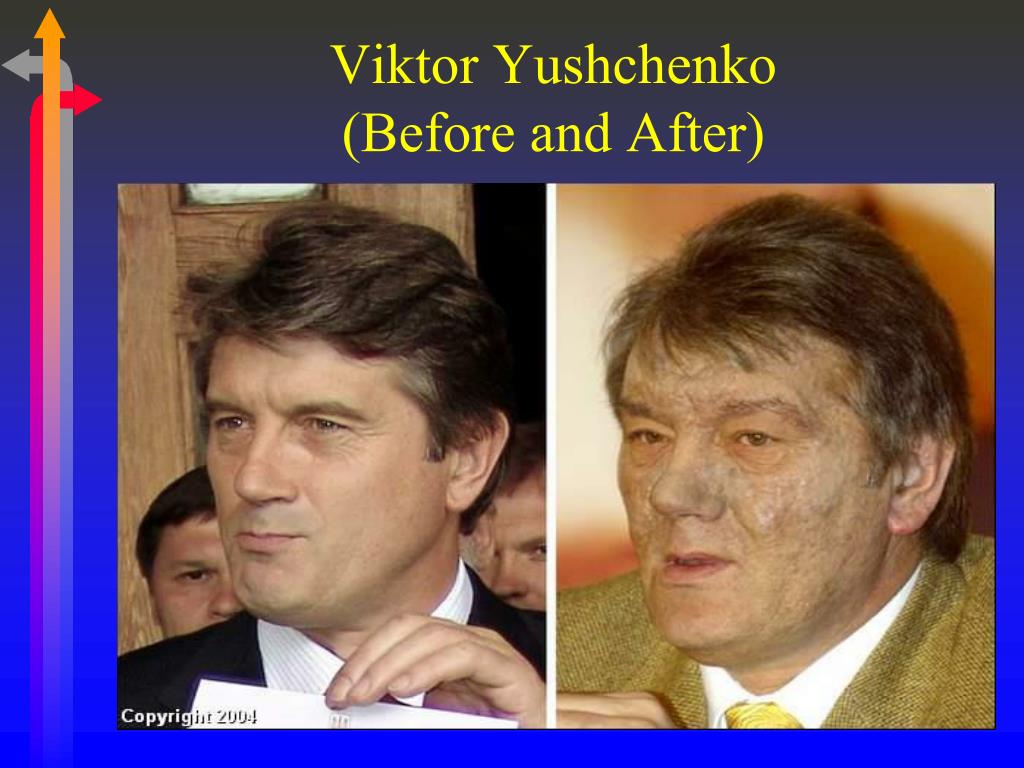
It gets noteworthy in 2004 starting with Viktor Yushchenko. Yushchenko had been Ukraine's central banker, as well as prime minister, but faced opposition by the coal and gas faction and the oligarchs.  In 2004, as Kuchma's term was ending, Yushchenko announced his candidacy for president as an independent. His major rival was Viktor Yanukovych (remember that name), then prime minister.
Yushchenko got dioxin poisoning at a dinner with a group of senior Ukrainian officials. It didn't kill him, but it did mess him up pretty good. 

Yushchenko lost the first round, that was fraught with, let's say, "irregularities".  After massive protests in Kiev (known as the Orange Revolution), the Supreme Court overturned the election results and ordered a re-vote. Yushchenko won, but Yanukovych was his prime minister until 2007, succeeded by Yulia Tymoshenko .

Yanukovych finally won the presidency in 2010, running against Yulia Tymoshenko.  Now, if you think he looks an awful lot like Paul Manafort, that's hardly a coincidence.  That's when Manafort did his image makeover for Yanukovych. Before that, he was basically a cheap track suit wearing, hairy chested mafia thug, and also the best looking of the bunch.


So, keep all that in mind as we go forward.

Yushchenko - pro-EU - poisoned with dioxin.
Yanukovych - pro-Russia - queer-eyed by Paul Manafort.
Poroshenko - "the Chocolate King" - after Yanukovych fled to Russia
Zelensky - the other president Giuliani tried to mess with.


Why care about the Black Sea

Russia spans 10 time zones, yet neither it nor the former USSR has a warm water port – one that can stay open during the winter.  During the Soviet era, the Black Sea fleet was pretty much the flagship fleet.


The Black Sea is bordered on the south by Turkey, on the west by Bulgaria and Romania, on the north by Ukraine, and on the east by Georgia and Russia. 

When the USSR collapsed, the Russians were afraid that Ukraine would take ownership of the Soviet fleet there.  It wasn’t totally finished by then, but the Russians pulled anchor on an aircraft carrier (the “Kuznetsov”) they were building not far from Odessa, Ukraine, and hauled ass through the Turkish Straits and into the Mediterranean.  Since it was “out in the open” like that, everybody was sending up planes to buzz it.  We even heard that an Italian Harrier tried to land on it and the Russians had to come out and shoot at it to get him to back off.  That was, in fact, my last mission flight for the Navy, and the only time I got airsick.  (When you fly low like that, it gets really hot and bumpy.)

A quick look at the geography gives you a clue about many of Russia’s policy positions – its opposition to Turkey being a member of NATO; its opposition to Ukraine aligning with the EU.  Take a look, also, at that peninsula in the middle of the northern coast.  That’s the Crimean Peninsula and it used to be part of Ukraine.


Wednesday, November 06, 2019

The devil went down to Georgia


There is a lot of oil and gas around the Caspian Sea.  The problem for producers is getting it OUT of that area.  It is bordered on the south by Iran, on the east by Turkmenistan, on the northeast by Kazakhstan, on the northwest by Russia, and on the west by Azerbaijan. 


One quick way would be to get it to ports in the Black Sea through Azerbaijan and Georgia. 


The region of Ossetia extends over both sides of the Caucasus mountains, which, on the north side was in Russia and on the south side was in Georgia.  In 2008, separatists in South Ossetia “broke away” from Georgia.  North Ossetia didn’t try to become independent from Russia, though, and the newly “united” Ossetia quickly (re)joined Russia, which graciously accepted to annex them.
At the time, there were 3 oil and gas pipelines from Azerbaijan to the Black Sea, two of which ran through South Ossetia.  By acquiring this area, Russia now controlled two of them


Monday, November 04, 2019

There really was something known as communism

The Cold War was as much a war of ideology as it was a military one.  Capitalism vs. Communism.  Nato and the US on one site; the USSR and Soviet Bloc on the other side.  And, while the leaders at every level had to be increasingly dogmatic in their adherence to and defense of their specific ideology, the people still had to get by.  

This meant going to school and work, acquiring the necessary articles for life as best one could, trying to stay safe and warm, worrying about the kids and parents, searching for happiness where one finds it.  The people in the USSR had to navigate the Communist constructs.  And in that construct, capitalism was illegal.  Anyone who was dabbling in anything resembling free market capitalism was a criminal - it was against the law.  It was still done, of course, but it was technically illegal.  So, most "normal" people shied away from it.  The only people who had any experience with capitalism were the criminals.

In 1991, the USSR collapsed and the Communist experiment ended suddenly.  In the years to come, Yeltsin would lead a rampant privatization of national industrial assets and companies. Suddenly, that which was only recently previously illegal is now the way things are supposed to be done.  And again, it was only the criminals who had any experience (or money, or connections) to succeed in the new paradigm.  So, where "organized crime" was more or less contained (or at least disorganized) in western Europe and America, it is the significant operating structure in Russia.  These became the oligarchs.


Sunday, November 03, 2019

Presidents of Russia

Mikhail Gorbachev was President of the Soviet Union in 1991. He was a reformist and, during his tenure, two words entered into our common lexicon - glasnost and perestroika.  Glasnost ("openness") was allowing for greater freedom of speech and press.  Perestroika ("restructuring") focused on decentralizing economic decision making to improve efficiency. In August of 1991 a group of Communist hard liners who were opposed to Gorbachev's reforms staged a coup d'état attempt. The coup failed quickly, but led almost immediately to the dissolution of the USSR, with member countries declaring their independence. After leaving office, he launched his Gorbachev Foundation, became a vocal critic of Boris Yeltsin and Vladimir Putin, and campaigned for Russia's social-democratic movement.

When the USSR broke apart, Russia, too, became an independent country.  Boris Yeltsin was, then, its first president.  Yeltsin tried to transform Russia's socialist economy into a capitalist market economy by  nationwide privatization and lifting of price controls. The quick results were economic collapse and inflation. A small number of oligarchs obtained a majority of the national property during the privatization sell-off.  There was a constitutional crisis in 1993, during which Yeltsin dissolved the parliament, which responded by attempting to remove him from office. With the help of the military, Yeltsin put down an armed uprising outside of the parliament building and then introduced a new constitution. In 1999 he resigned and was succeeded by former Prime Minister Vladimir Putin.

There has been one other president of Russia (other than Putin) since Yeltsin - Dmitry Medvedev. Medvedev had worked with Putin in St. Petersburg and was installed in various top government positions. https://en.wikipedia.org/wiki/Dmitry_Medvedev#Career_in_St_Petersburg

Putin - well you can read up about him just about anywhere.  Just keep in mind
1) he did work the KGB (in East Germany when the Berlin wall came down),
2) he was deputy mayor of St. Petersburg in 1991 (when the USSR collapsed),
3) Yeltsin appointed Putin as Director of the Federal Security Service (FSB) in 1998,
4) Yeltsin resigned on December 31, 1999, which made Putin acting president.

Saturday, November 02, 2019

There was once a USSR

Union of Soviet Socialist Republics - USSR
https://en.wikipedia.org/wiki/Republics_of_the_Soviet_Union

Armenia
Azerbaijan
Byeloruss
Estonia
Georgia
Kazakhstan
Kirghistan
Latvia
Lithuania
Moldova
Russia
Tajikistan
Turkmenistan
Ukraine
Uzbekistan

In December 1991 (while I was in the US Navy, serving as an airborne Cryptologic Technician (RuLing), the Soviet Union dissolved, when Russia, Ukraine, and Belarus seceded from the Union.  All of the former Republics of the Union are now independent countries, with ten of them being  loosely organized under the heading of the Commonwealth of Independent States. Georgia and Ukraine are independent countries.  It's important to keep in mind these alignments in order to understand what is happening now in the region and how it impacting us.

By the way, the countries where Benny Mitchell, Kris Grimes, and I (along with a team of others) smuggled Bibles during the summer of 1986 were Soviet Bloc countries (Czechoslovakia, Yugoslavia, Romania, Hungary, Poland).  They were communist in government, but not part of the USSR.  Their role for the USSR was as buffer states against western Europe.

Sunday, October 30, 2016

An apology to the world

For my friends living outside of the U.S. who might be wondering what Americans could possibly be thinking.

First of all, I want to say I voted early and not for Trump.  So, this is not an attempt to explain myself. It's an attempt to explain that part of the population that is going to vote for him.  Please understand, while there are some genuinely crazy, xenophobic, rotten people in that camp (and odds are good those are the ones you're seeing, because their craziness is sort of entertaining), the VAST majority of Republicans are actually good people.  They are neither stupid nor (totally) crazy.  They don't approve of what Trump has done or is doing, and they certainly don't want to do it themselves.  Why, then, are they going to vote for him?

Nobody is really supporting Trump.  In the past, Republicans have been able to truly get behind whatever candidate their party foisted upon them.  Often, the more faults the candidate had to forgive, the more the party faithful would embrace him.  (Think George W. Bush).  4 years ago, they were able to disregard the fact that their nominee wasn't even Christian.  Even Sarah Palin is still active in Republican politics.  It used to be fun watching them perform amazing feats of mental gymnastics, and I've been studying the mechanics of their memetic programming for years.  This time, however, they're not embracing their candidate.  They're not accepting or excusing his flaws.  They're not making up stories to share with each other about how God has blessed them with such a perfect candidate.

We all know what he is.  He is a grotesque, narcissistic con artist.  There's no doubt about that.  He is crude, greedy, foul-mouthed - he's a disaster.  We know this.  And while one might think that this should be enough to at least convince people not to vote for the man (if not disqualify him outright), I contend that this smelly package is precisely why he won their nomination and why they're happy to vote for him.

It is a protest vote.  He is the anti-candidate.  Republicans are so fed up with our government that they would prefer simply to tear it all down.  Trump won their nomination by ridiculing the other Republican candidates, all of whom had government experience, some currently.  (I'm not counting Ben Carson, who would have been a similar anti-candidate).  He ridiculed them BECAUSE of their experience.

Honestly, all the negative publicity that comes out about Trump only serves to strengthen their resolve about their decision.  The worse he smells, the stronger the message they will be sending to the establishment.

So, this might be that part of them that is a little bit crazy.  I had to go back and add that "totally" part in the first paragraph because it does require a certain level of insanity to want to sink the ship you're riding in.  But that is what many of them want.  They are going to vote for Trump to send a message to Washington.  If he loses, they will have still rattled their cages a lot.  If he wins, he will probably be the train wreck we all fear.  Either way, their message will have been sent.


Friday, January 29, 2016

Remembering Patrick Bourassa

I interviewed Patrick in French over the phone for  Server Tech position at Dell.  I was in Dublin while Patrick was in Geneva.  We hired him and I became his mentor,  of sorts, while he was there.  Patrick had his MCSE, was very good technically, and really cared about his customers.

After about a year there, Patrick told me he was taking leave to go to Moscow to get certified in some Russian martial art.  While that part might have been true, he was also apparently going there to pick up (or pick out) a Russian bride; he came back to Ireland with a pretty blond Russian girl.  Then, a few months into her first pregnancy, they suddenly disappeared.

Patrick was living in a small town south of Dublin (think Ballykissangle) and was getting rides to work with a French-speaking TAM from South Africa, who lived even further south.  Colin kept going by, but no one was ever there and nothing ever changed in the view through the window.  It was only months later that we started getting emails from Patrick saying something about his wife, pregnancy, embassy, emergency medical evac back to the states.  The details of it all really were that sketchy.

A few months later, Patrick showed back up in Dublin, hoping to find a job in Ireland.  I saw him for the last time in front of the Dell office and lent him some money.  Obviously, Dell wasn't going to hire him back, but he was hoping to be able to find something.  He was switching between staying with Colin and Nic R., both of whom lived about an hour south of Dublin.  It was then that we found out that Patrick was a raging alcoholic.  He was drinking everything he could get his hands on.  And apparently, he wasn't a fun, happy drunk.  He was paranoid and scary.  He had also gotten some powerful anti-depressants while in the states, but couldn't get the prescription renewed in Ireland.

A not so quick Google search by concerned hosts revealed, among other things, an article in German, complete with an unflattering picture, describing the warrant for his arrest.  We called the police station in Germany to find out if the warrant was still in effect.  It turns out that he had just skipped out on rent and his landlady had pressed charges.  The misdemeanor was of much less concern than the description of the female companion who was also listed on the warrant.  The tall dark-haired Austrian was quite unlike the petite blond Russian we knew about.

There were a lot of theories about Patrick's past.  Personally, I think he may have worked for agency (that must not be named) and had done things that injured his conscience.  I think he had memories that were haunting him and his drinking was an attempt to quiet the voices in his head.  He was smart enough (or well trained enough) to construct completely new identities, which worked for a while until the skeletons in his closet started rattling again.  Then he would have to try to escape them.

In any case, since his reluctant hosts both had families, and since Patrick was becoming increasingly unhinged, they had to kick him out.  Colin packed up his belongings and took them to the nearest Garda station, where he told Patrick to go.  We had to piece together what happened next from various sources.  Ireland does have homeless shelters, but there are rules.  On one particular night Patrick was too drunk to be allowed into the last shelter he tried to go to. January in Ireland is not a fun, snowey Winterland; it's very cold and very wet.  Patrick died of exposure, drunk and homeless, on the streets of Dublin that night, January 29, 2007.

When the police found his body, he had no identification on him.  They were going to bury him in an unmarked grave, but Dennis Muldoon (an Irishman who lived in France and was good friends with Patrick) claimed the body at the morgue.  He had it cremated and arranged with the U.S. embassy to have the remains flown the Patrick's family in Pennsylvania.

Sunday, February 03, 2013

Back from the future


From “Lindbergh on the Federal Reserve”, published in 1923.  In this excerpt, Lindbergh quotes from an article published in 1892 in a banker's magazine.  The quote is long enough that I didn't want to use the offset.

"Remedy has been attempted by alternately shifting from one to the other of the old political parties.  It has been done so many times without substantial benefit that it has become a farce.  Voters must realize that the old party leaders shout the ideals the people had in the original formation of the parties.  Party leaders do that for propaganda purposes only.  They proclaim good, and do evil.  They invent all sorts of words and phrases and adopt platforms, all of which are not so bad in themselves, so far as they go, but are simply used as propaganda to fool the voters.  In practice, not only are the ideals deserted but they are flagrantly violated.

The frequent panics forced upon the people are created by manipulation for the benefit of profiteers.  Between panics we have what in comparison are called “good times.”  But times are never as good as they would be if business were done in the easiest and most proper way.

When a panic seems to be ended the people start in the build up again, thinking to profit by what they learned in the squeeze.  But most of us learn nothing by panics except that we are hit severely.  Just how and by whom we are hit, comparatively few of us know.

Before reviewing certain acts, it is well to observe the plan of the capitalists as stated in an article of thirty years ago.  It was not intended for the public, but was propaganda to hold the big bankers together.  The article was as follows:

“We (meaning the bankers) must proceed with caution and guard every move made, for the lower order of the people are already showing signs of restless commotion.  Prudence will therefore show a policy of apparently yielding to the popular will until our plans are so far consummated that we can declare our designs without fear of any organized resistance. 

“The Farmers’ Alliance and Knights of Labor organization in the United States should be carefully watched by our trusted men, and we must take immediate e steps to control these organizations in our interest or disrupt them.

“at the coming Omaha convention to be held July 4 (1892), our men must attend and direct its movement, or else there will be set on foot such antagonism to our designs as may require force to overcome.  This at the present time would be premature.  We are not yet ready for such a crisis.  Capital must protect itself in every possible manner through combination and legislation. 

“The courts must be called to our aid, debts must be collected, bonds and mortgages foreclosed as rapidly as possible.

“When through the process of law the common people have lost their homes, they will be more tractable and easily governed through the influence of the strong arm of the government applied by a central power of imperial wealth under the control of the leading financiers.  People without homes will not quarrel with their leaders.

“History repeats itself in regular cycles.  This truth is well known among our principal men who are engaged in forming an imperialism of the world.  While they are doing this, the people must be kept in a state of political antagonism. 

“The question of tariff reform must be urged through the organization known as the Democratic Party, and the question of protection of reciprocity must be forced to view through the Republican Party.

“By thus dividing the voters, we can get them to expend their energies in fighting over questions of no importance to us, except as teachers of the common herd.  Thus, by discrete action, we can secure all that has been so generously planned and successfully accomplished.”

The facts stated in the foregoing article are only too true.  We have a tremendous responsibility to overcome the imposition of imperial wealth.  For more than sixty years the odds have been tremendously against us.  While we have been fighting questions of no importance to the wealthy, electing men to Congress because they claimed to belong to a political party which we happened to favor, irrespective of party these Congressmen have passed numerous bills for the benefit of profiteers, giving them the opportunity to exploit us through such measures as the Federal Reserve Bank Act and the Esch-Cummins Railway Act. 

Even before the acts named became law, the profiteers were protected by legislation and combination of trusts.  But wealth demanded even more than the strong arm the government had previously given.  Through Congressmen whom the voters elected and through other public officials, the wealth group got possession of natural resources like water-powers, minerals, forests, etc.  But the greatest of all public gifts were the new bank act and the new railway act."
-------------------------------------
 Background on the Esch-Cummins Act (from Wikipedia)

The United States had entered World War I in April 1917, and the government found that the nation's railroads were not prepared to serve the war effort. On December 26, 1917, President Woodrow Wilson had ordered that U.S. railroads be nationalized in the public interest. The Esch–Cummins Act of 1920, or Railroad Transportation Act, returned railroads to private operation after World War I.  It authorized the government to make settlements with railroad carriers for matters caused by nationalization, such as compensation and other expenses.  It also officially encouraged private consolidation of railroads and mandated that the Interstate Commerce Commission (ICC) ensure their profitability.


Saturday, January 05, 2013

A peek at the old playbook


“Like the nation itself as the Depression-laden 1930s unfolded, labor was divided.  Like its enemies on the extreme Right, though for different reasons, it felt alienated from the Republic. 

Trade unionism was still bitterly fought by the employers and scarcely encouraged by the government, even when the government was radical and supported by the Socialists.  And the unions weakened themselves by splitting into two hostile groups. 

The collapse of the general strike in May 1920 had almost destroyed the trade-union movement in France.  Ruthlessly put down by the government of the former Socialist Millerand, with troops, police, and strikebreakers, the work stoppage ended with hundreds of labor leaders in jail, the CGT (General Confederation of Labor) outlawed y the courts, and thousands of workers deprived of the their jobs for having walked out.  In despair, workingmen left their unions in droves.  For 16 years, 90 percent of French workers remained unorganized.  They sank into a deep apathy, convinced that there was no hope for them – from the unions, from a hostile government, from a rural-dominated Parliament that had no comprehension of a city laborer’s lot, or from the employers, who, encouraged by the collapse of the strike, were now determined to eliminate the unions completely, deal with their employees on an individual basis and on their own terms, and even to sabotage the eight-hour day, which Parliament had voted in 1919, and the mild social-insurance legislation which the two chambers were threatening to enact, and finally at the end of the twenties did.

Without collective-bargaining power the French worker found himself deprived of a fair share of the economic gains that came as prosperity returned to France after the first war.  Real wages lagged behind the increase in profits and production.  After the Depression hit, total wages fell by one third and unemployment rose sharply.  But for a decade and a half labor submitted almost meekly to this diminution.  There were few strikes.  Employers welcomed what they called an era of “social stability” and “labor peace.”  Few among the prosperous middle and upper classes were aware that beneath the economic misery of the French workers was a moral one, which was perhaps even more degrading.  A sense of humiliation, of oppression, of helplessness, came over them.  It is not surprising that many of them became quite indifferent to the fate of the Republic whose Parliament and government seemed to them to have combined with the employers and the moneyed classes to shut them out of the French community.  They were doing its labor but they were receiving few of its benefits or privileges and had little voice in it."