Monday, November 11, 2019

No, you don't get to take that


Almost as soon as they annexed the Crimean peninsula, the Russians invaded 2 “oblasts” (states) of eastern Ukraine, using almost exactly the same method and pretext as they did in Crimea.


This area is not insignificant, but even if it were, it would still be a serious violation of international law. 
The U.S. has committed more than $1.5 billion in security assistance to Ukraine since 2014. The “lethal aid” portion was set to include sniper rifles, rocket-propelled grenade launchers, counter-artillery radars, electronic warfare detection and secure communications, night vision equipment, and military medical supplies and treatment. After Ukraine’s military began using Javelin anti-tank weapons, Russian tanks and armored personnel carriers that once operated with devastating impunity have backed off.  But beyond the obvious tangible impact, the aid created “an immeasurable, psychological impact — that the U.S. has our back."


Sunday, November 10, 2019

Crimea River

As soon as Yanukovych fled to Russia after the Ukranian revolution of 2014, Putin decided to just take Crimea “back”.  Like Ossetia, Crimea had sort of wanted to be independent, but it was technically part of Ukraine. Geographically, it’s the peninsula that extends south form Ukraine into the Black Sea.


This time, instead of Crimea “declaring their independence and then asking to join Russia, Russia simply invaded.  “Little green men” (Russian soldiers wearing no insignia) took over the peninsula and the port of Sevastopol. Putin signed a treaty of accession with the self-declared Republic of Crimea, annexing it into the Russian Federation. Ukraine along with the international community called the annexation an illegal “change to the integrity of Ukraine”.


This led to a first round ofinternational sanctions that have remained in place against Russia and a number of named individuals.   The sanctions, along with a fall in oil prices, led to a collapse of the Ruble and a decline in the Russian economy.  
These were not, ostensibly, the sanctions that were the subject of the Trump Tower meeting. Those sanctions were a result of the MagnitskyAct of 2012.  Nor were they the sanctions that Michael Flynn told the Russians not to worry about; that the Trump administration would remove them as soon as they got into office.  Those sanctions were the result of Russian meddling in our election.  


Saturday, November 09, 2019

Paul Manafort's other pro-Russia president

Anytime you hear the name Paul Manafort, think of two things - Viktor Yanukovych and a zoo.
Yanukovych ran for president against Viktor Yushchenko in 2004 and was originally declared the winner but allegations of fraud and vote tampering brought thousands of people to protest in what became known as the Orange Revolution and led to a rerun of the election where Yushchenko beat Yanukovych.

Paul Manafort was brought in to rehabilitate Yanukovych's political career and public image in the aftermath of the Orange Revolution.  The FBI began a criminal investigation into Manafort's business dealings while he was lobbying for Yanukovych. Between 2010 and 2014 Manafort was paid more than $60 million and was eventually convicted of fraud and tax evasion.


Post-Soviet Ukraine has always been torn between the west (Europe and America) and Russia, and Yanukovych was always pro-Russia.  As soon as he became president, he struck a deal to extend Russia’s lease of the port at Sevastopol, the base of the Russian Black Sea Fleet, until 2042. In exchange, Ukraine would receive a reduction in the price of Russian natural gas. In 2013, he pulled out of an agreement that would have potentially brought the country into the EU, and decided instead to move the country further into Russia’s economic sphere.

All of this led to a revolution in 2014 that brought massive crowds into Independence Square in Kiev (all of this during the winter Olympics in Sochi). At least 100 people died during the protests, as the government tried to violently put down the demonstrations.  Yanukovych fled Kiev during the night of 21 February 2014, assisted by Russian troops.

But why a zoo, you ask?

 After Yanukovych was run out, the Ukranians got to see what his life was really like.  They were amazed at the opulence and extravagance of what they found, including a private zoo, a fleet of cars, and a large boat in an artificial lake. The property is now a museum displaying Yanukovych's luxurious lifestyle.

So, here's a quick profile of Paul Manafort's boy in Ukraine
https://en.wikipedia.org/wiki/Viktor_Yanukovych#Former_criminal_convictions_and_new_criminal_cases
  • robbery 
  • assault (twice)
  • fraud
  • forgery
  • battery
  • accused of mass murder of civilians
  • put on the US sanction list in 2014
  • suspected of bribery
  • charged with abuse of power and state treason
  • charged with property theft 


Thursday, November 07, 2019

Recent Ukrainian Presidents

The short list goes like this:

  • 1991-1994 - Leonid Kravchuk
  • 1994-2005 - Leonid Kuchma
  • 2005-2010 - Viktor Yushchenko
  • 2010-2014 - Viktor Yanukovych
  • 2014-2019 - Petro Poroshenko
  • 2019- Volodymyr Zelensky

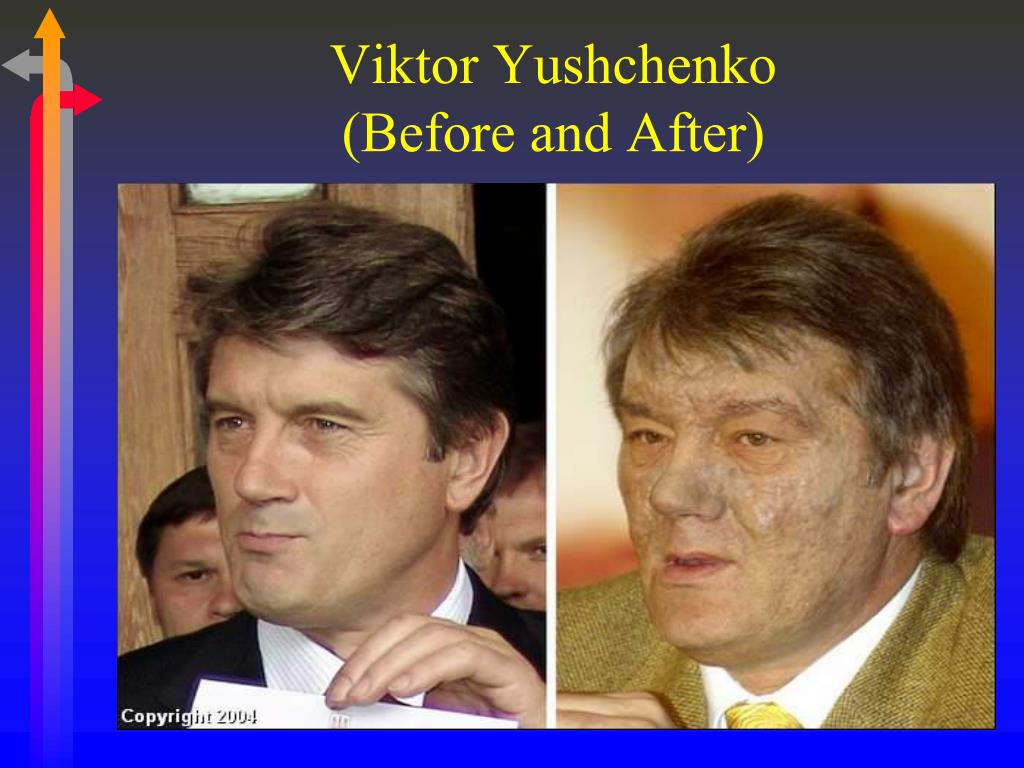
It gets noteworthy in 2004 starting with Viktor Yushchenko. Yushchenko had been Ukraine's central banker, as well as prime minister, but faced opposition by the coal and gas faction and the oligarchs.  In 2004, as Kuchma's term was ending, Yushchenko announced his candidacy for president as an independent. His major rival was Viktor Yanukovych (remember that name), then prime minister.
Yushchenko got dioxin poisoning at a dinner with a group of senior Ukrainian officials. It didn't kill him, but it did mess him up pretty good. 

Yushchenko lost the first round, that was fraught with, let's say, "irregularities".  After massive protests in Kiev (known as the Orange Revolution), the Supreme Court overturned the election results and ordered a re-vote. Yushchenko won, but Yanukovych was his prime minister until 2007, succeeded by Yulia Tymoshenko .

Yanukovych finally won the presidency in 2010, running against Yulia Tymoshenko.  Now, if you think he looks an awful lot like Paul Manafort, that's hardly a coincidence.  That's when Manafort did his image makeover for Yanukovych. Before that, he was basically a cheap track suit wearing, hairy chested mafia thug, and also the best looking of the bunch.


So, keep all that in mind as we go forward.

Yushchenko - pro-EU - poisoned with dioxin.
Yanukovych - pro-Russia - queer-eyed by Paul Manafort.
Poroshenko - "the Chocolate King" - after Yanukovych fled to Russia
Zelensky - the other president Giuliani tried to mess with.


Why care about the Black Sea

Russia spans 10 time zones, yet neither it nor the former USSR has a warm water port – one that can stay open during the winter.  During the Soviet era, the Black Sea fleet was pretty much the flagship fleet.


The Black Sea is bordered on the south by Turkey, on the west by Bulgaria and Romania, on the north by Ukraine, and on the east by Georgia and Russia. 

When the USSR collapsed, the Russians were afraid that Ukraine would take ownership of the Soviet fleet there.  It wasn’t totally finished by then, but the Russians pulled anchor on an aircraft carrier (the “Kuznetsov”) they were building not far from Odessa, Ukraine, and hauled ass through the Turkish Straits and into the Mediterranean.  Since it was “out in the open” like that, everybody was sending up planes to buzz it.  We even heard that an Italian Harrier tried to land on it and the Russians had to come out and shoot at it to get him to back off.  That was, in fact, my last mission flight for the Navy, and the only time I got airsick.  (When you fly low like that, it gets really hot and bumpy.)

A quick look at the geography gives you a clue about many of Russia’s policy positions – its opposition to Turkey being a member of NATO; its opposition to Ukraine aligning with the EU.  Take a look, also, at that peninsula in the middle of the northern coast.  That’s the Crimean Peninsula and it used to be part of Ukraine.


Wednesday, November 06, 2019

The devil went down to Georgia


There is a lot of oil and gas around the Caspian Sea.  The problem for producers is getting it OUT of that area.  It is bordered on the south by Iran, on the east by Turkmenistan, on the northeast by Kazakhstan, on the northwest by Russia, and on the west by Azerbaijan. 


One quick way would be to get it to ports in the Black Sea through Azerbaijan and Georgia. 


The region of Ossetia extends over both sides of the Caucasus mountains, which, on the north side was in Russia and on the south side was in Georgia.  In 2008, separatists in South Ossetia “broke away” from Georgia.  North Ossetia didn’t try to become independent from Russia, though, and the newly “united” Ossetia quickly (re)joined Russia, which graciously accepted to annex them.
At the time, there were 3 oil and gas pipelines from Azerbaijan to the Black Sea, two of which ran through South Ossetia.  By acquiring this area, Russia now controlled two of them


Monday, November 04, 2019

There really was something known as communism

The Cold War was as much a war of ideology as it was a military one.  Capitalism vs. Communism.  Nato and the US on one site; the USSR and Soviet Bloc on the other side.  And, while the leaders at every level had to be increasingly dogmatic in their adherence to and defense of their specific ideology, the people still had to get by.  

This meant going to school and work, acquiring the necessary articles for life as best one could, trying to stay safe and warm, worrying about the kids and parents, searching for happiness where one finds it.  The people in the USSR had to navigate the Communist constructs.  And in that construct, capitalism was illegal.  Anyone who was dabbling in anything resembling free market capitalism was a criminal - it was against the law.  It was still done, of course, but it was technically illegal.  So, most "normal" people shied away from it.  The only people who had any experience with capitalism were the criminals.

In 1991, the USSR collapsed and the Communist experiment ended suddenly.  In the years to come, Yeltsin would lead a rampant privatization of national industrial assets and companies. Suddenly, that which was only recently previously illegal is now the way things are supposed to be done.  And again, it was only the criminals who had any experience (or money, or connections) to succeed in the new paradigm.  So, where "organized crime" was more or less contained (or at least disorganized) in western Europe and America, it is the significant operating structure in Russia.  These became the oligarchs.


Sunday, November 03, 2019

Presidents of Russia

Mikhail Gorbachev was President of the Soviet Union in 1991. He was a reformist and, during his tenure, two words entered into our common lexicon - glasnost and perestroika.  Glasnost ("openness") was allowing for greater freedom of speech and press.  Perestroika ("restructuring") focused on decentralizing economic decision making to improve efficiency. In August of 1991 a group of Communist hard liners who were opposed to Gorbachev's reforms staged a coup d'état attempt. The coup failed quickly, but led almost immediately to the dissolution of the USSR, with member countries declaring their independence. After leaving office, he launched his Gorbachev Foundation, became a vocal critic of Boris Yeltsin and Vladimir Putin, and campaigned for Russia's social-democratic movement.

When the USSR broke apart, Russia, too, became an independent country.  Boris Yeltsin was, then, its first president.  Yeltsin tried to transform Russia's socialist economy into a capitalist market economy by  nationwide privatization and lifting of price controls. The quick results were economic collapse and inflation. A small number of oligarchs obtained a majority of the national property during the privatization sell-off.  There was a constitutional crisis in 1993, during which Yeltsin dissolved the parliament, which responded by attempting to remove him from office. With the help of the military, Yeltsin put down an armed uprising outside of the parliament building and then introduced a new constitution. In 1999 he resigned and was succeeded by former Prime Minister Vladimir Putin.

There has been one other president of Russia (other than Putin) since Yeltsin - Dmitry Medvedev. Medvedev had worked with Putin in St. Petersburg and was installed in various top government positions. https://en.wikipedia.org/wiki/Dmitry_Medvedev#Career_in_St_Petersburg

Putin - well you can read up about him just about anywhere.  Just keep in mind
1) he did work the KGB (in East Germany when the Berlin wall came down),
2) he was deputy mayor of St. Petersburg in 1991 (when the USSR collapsed),
3) Yeltsin appointed Putin as Director of the Federal Security Service (FSB) in 1998,
4) Yeltsin resigned on December 31, 1999, which made Putin acting president.

Saturday, November 02, 2019

There was once a USSR

Union of Soviet Socialist Republics - USSR
https://en.wikipedia.org/wiki/Republics_of_the_Soviet_Union

Armenia
Azerbaijan
Byeloruss
Estonia
Georgia
Kazakhstan
Kirghistan
Latvia
Lithuania
Moldova
Russia
Tajikistan
Turkmenistan
Ukraine
Uzbekistan

In December 1991 (while I was in the US Navy, serving as an airborne Cryptologic Technician (RuLing), the Soviet Union dissolved, when Russia, Ukraine, and Belarus seceded from the Union.  All of the former Republics of the Union are now independent countries, with ten of them being  loosely organized under the heading of the Commonwealth of Independent States. Georgia and Ukraine are independent countries.  It's important to keep in mind these alignments in order to understand what is happening now in the region and how it impacting us.

By the way, the countries where Benny Mitchell, Kris Grimes, and I (along with a team of others) smuggled Bibles during the summer of 1986 were Soviet Bloc countries (Czechoslovakia, Yugoslavia, Romania, Hungary, Poland).  They were communist in government, but not part of the USSR.  Their role for the USSR was as buffer states against western Europe.

Sunday, October 30, 2016

An apology to the world

For my friends living outside of the U.S. who might be wondering what Americans could possibly be thinking.

First of all, I want to say I voted early and not for Trump.  So, this is not an attempt to explain myself. It's an attempt to explain that part of the population that is going to vote for him.  Please understand, while there are some genuinely crazy, xenophobic, rotten people in that camp (and odds are good those are the ones you're seeing, because their craziness is sort of entertaining), the VAST majority of Republicans are actually good people.  They are neither stupid nor (totally) crazy.  They don't approve of what Trump has done or is doing, and they certainly don't want to do it themselves.  Why, then, are they going to vote for him?

Nobody is really supporting Trump.  In the past, Republicans have been able to truly get behind whatever candidate their party foisted upon them.  Often, the more faults the candidate had to forgive, the more the party faithful would embrace him.  (Think George W. Bush).  4 years ago, they were able to disregard the fact that their nominee wasn't even Christian.  Even Sarah Palin is still active in Republican politics.  It used to be fun watching them perform amazing feats of mental gymnastics, and I've been studying the mechanics of their memetic programming for years.  This time, however, they're not embracing their candidate.  They're not accepting or excusing his flaws.  They're not making up stories to share with each other about how God has blessed them with such a perfect candidate.

We all know what he is.  He is a grotesque, narcissistic con artist.  There's no doubt about that.  He is crude, greedy, foul-mouthed - he's a disaster.  We know this.  And while one might think that this should be enough to at least convince people not to vote for the man (if not disqualify him outright), I contend that this smelly package is precisely why he won their nomination and why they're happy to vote for him.

It is a protest vote.  He is the anti-candidate.  Republicans are so fed up with our government that they would prefer simply to tear it all down.  Trump won their nomination by ridiculing the other Republican candidates, all of whom had government experience, some currently.  (I'm not counting Ben Carson, who would have been a similar anti-candidate).  He ridiculed them BECAUSE of their experience.

Honestly, all the negative publicity that comes out about Trump only serves to strengthen their resolve about their decision.  The worse he smells, the stronger the message they will be sending to the establishment.

So, this might be that part of them that is a little bit crazy.  I had to go back and add that "totally" part in the first paragraph because it does require a certain level of insanity to want to sink the ship you're riding in.  But that is what many of them want.  They are going to vote for Trump to send a message to Washington.  If he loses, they will have still rattled their cages a lot.  If he wins, he will probably be the train wreck we all fear.  Either way, their message will have been sent.


Friday, January 29, 2016

Remembering Patrick Bourassa

I interviewed Patrick in French over the phone for  Server Tech position at Dell.  I was in Dublin while Patrick was in Geneva.  We hired him and I became his mentor,  of sorts, while he was there.  Patrick had his MCSE, was very good technically, and really cared about his customers.

After about a year there, Patrick told me he was taking leave to go to Moscow to get certified in some Russian martial art.  While that part might have been true, he was also apparently going there to pick up (or pick out) a Russian bride; he came back to Ireland with a pretty blond Russian girl.  Then, a few months into her first pregnancy, they suddenly disappeared.

Patrick was living in a small town south of Dublin (think Ballykissangle) and was getting rides to work with a French-speaking TAM from South Africa, who lived even further south.  Colin kept going by, but no one was ever there and nothing ever changed in the view through the window.  It was only months later that we started getting emails from Patrick saying something about his wife, pregnancy, embassy, emergency medical evac back to the states.  The details of it all really were that sketchy.

A few months later, Patrick showed back up in Dublin, hoping to find a job in Ireland.  I saw him for the last time in front of the Dell office and lent him some money.  Obviously, Dell wasn't going to hire him back, but he was hoping to be able to find something.  He was switching between staying with Colin and Nic R., both of whom lived about an hour south of Dublin.  It was then that we found out that Patrick was a raging alcoholic.  He was drinking everything he could get his hands on.  And apparently, he wasn't a fun, happy drunk.  He was paranoid and scary.  He had also gotten some powerful anti-depressants while in the states, but couldn't get the prescription renewed in Ireland.

A not so quick Google search by concerned hosts revealed, among other things, an article in German, complete with an unflattering picture, describing the warrant for his arrest.  We called the police station in Germany to find out if the warrant was still in effect.  It turns out that he had just skipped out on rent and his landlady had pressed charges.  The misdemeanor was of much less concern than the description of the female companion who was also listed on the warrant.  The tall dark-haired Austrian was quite unlike the petite blond Russian we knew about.

There were a lot of theories about Patrick's past.  Personally, I think he may have worked for agency (that must not be named) and had done things that injured his conscience.  I think he had memories that were haunting him and his drinking was an attempt to quiet the voices in his head.  He was smart enough (or well trained enough) to construct completely new identities, which worked for a while until the skeletons in his closet started rattling again.  Then he would have to try to escape them.

In any case, since his reluctant hosts both had families, and since Patrick was becoming increasingly unhinged, they had to kick him out.  Colin packed up his belongings and took them to the nearest Garda station, where he told Patrick to go.  We had to piece together what happened next from various sources.  Ireland does have homeless shelters, but there are rules.  On one particular night Patrick was too drunk to be allowed into the last shelter he tried to go to. January in Ireland is not a fun, snowey Winterland; it's very cold and very wet.  Patrick died of exposure, drunk and homeless, on the streets of Dublin that night, January 29, 2007.

When the police found his body, he had no identification on him.  They were going to bury him in an unmarked grave, but Dennis Muldoon (an Irishman who lived in France and was good friends with Patrick) claimed the body at the morgue.  He had it cremated and arranged with the U.S. embassy to have the remains flown the Patrick's family in Pennsylvania.

Sunday, February 03, 2013

Back from the future


From “Lindbergh on the Federal Reserve”, published in 1923.  In this excerpt, Lindbergh quotes from an article published in 1892 in a banker's magazine.  The quote is long enough that I didn't want to use the offset.

"Remedy has been attempted by alternately shifting from one to the other of the old political parties.  It has been done so many times without substantial benefit that it has become a farce.  Voters must realize that the old party leaders shout the ideals the people had in the original formation of the parties.  Party leaders do that for propaganda purposes only.  They proclaim good, and do evil.  They invent all sorts of words and phrases and adopt platforms, all of which are not so bad in themselves, so far as they go, but are simply used as propaganda to fool the voters.  In practice, not only are the ideals deserted but they are flagrantly violated.

The frequent panics forced upon the people are created by manipulation for the benefit of profiteers.  Between panics we have what in comparison are called “good times.”  But times are never as good as they would be if business were done in the easiest and most proper way.

When a panic seems to be ended the people start in the build up again, thinking to profit by what they learned in the squeeze.  But most of us learn nothing by panics except that we are hit severely.  Just how and by whom we are hit, comparatively few of us know.

Before reviewing certain acts, it is well to observe the plan of the capitalists as stated in an article of thirty years ago.  It was not intended for the public, but was propaganda to hold the big bankers together.  The article was as follows:

“We (meaning the bankers) must proceed with caution and guard every move made, for the lower order of the people are already showing signs of restless commotion.  Prudence will therefore show a policy of apparently yielding to the popular will until our plans are so far consummated that we can declare our designs without fear of any organized resistance. 

“The Farmers’ Alliance and Knights of Labor organization in the United States should be carefully watched by our trusted men, and we must take immediate e steps to control these organizations in our interest or disrupt them.

“at the coming Omaha convention to be held July 4 (1892), our men must attend and direct its movement, or else there will be set on foot such antagonism to our designs as may require force to overcome.  This at the present time would be premature.  We are not yet ready for such a crisis.  Capital must protect itself in every possible manner through combination and legislation. 

“The courts must be called to our aid, debts must be collected, bonds and mortgages foreclosed as rapidly as possible.

“When through the process of law the common people have lost their homes, they will be more tractable and easily governed through the influence of the strong arm of the government applied by a central power of imperial wealth under the control of the leading financiers.  People without homes will not quarrel with their leaders.

“History repeats itself in regular cycles.  This truth is well known among our principal men who are engaged in forming an imperialism of the world.  While they are doing this, the people must be kept in a state of political antagonism. 

“The question of tariff reform must be urged through the organization known as the Democratic Party, and the question of protection of reciprocity must be forced to view through the Republican Party.

“By thus dividing the voters, we can get them to expend their energies in fighting over questions of no importance to us, except as teachers of the common herd.  Thus, by discrete action, we can secure all that has been so generously planned and successfully accomplished.”

The facts stated in the foregoing article are only too true.  We have a tremendous responsibility to overcome the imposition of imperial wealth.  For more than sixty years the odds have been tremendously against us.  While we have been fighting questions of no importance to the wealthy, electing men to Congress because they claimed to belong to a political party which we happened to favor, irrespective of party these Congressmen have passed numerous bills for the benefit of profiteers, giving them the opportunity to exploit us through such measures as the Federal Reserve Bank Act and the Esch-Cummins Railway Act. 

Even before the acts named became law, the profiteers were protected by legislation and combination of trusts.  But wealth demanded even more than the strong arm the government had previously given.  Through Congressmen whom the voters elected and through other public officials, the wealth group got possession of natural resources like water-powers, minerals, forests, etc.  But the greatest of all public gifts were the new bank act and the new railway act."
-------------------------------------
 Background on the Esch-Cummins Act (from Wikipedia)

The United States had entered World War I in April 1917, and the government found that the nation's railroads were not prepared to serve the war effort. On December 26, 1917, President Woodrow Wilson had ordered that U.S. railroads be nationalized in the public interest. The Esch–Cummins Act of 1920, or Railroad Transportation Act, returned railroads to private operation after World War I.  It authorized the government to make settlements with railroad carriers for matters caused by nationalization, such as compensation and other expenses.  It also officially encouraged private consolidation of railroads and mandated that the Interstate Commerce Commission (ICC) ensure their profitability.


Saturday, January 05, 2013

A peek at the old playbook


“Like the nation itself as the Depression-laden 1930s unfolded, labor was divided.  Like its enemies on the extreme Right, though for different reasons, it felt alienated from the Republic. 

Trade unionism was still bitterly fought by the employers and scarcely encouraged by the government, even when the government was radical and supported by the Socialists.  And the unions weakened themselves by splitting into two hostile groups. 

The collapse of the general strike in May 1920 had almost destroyed the trade-union movement in France.  Ruthlessly put down by the government of the former Socialist Millerand, with troops, police, and strikebreakers, the work stoppage ended with hundreds of labor leaders in jail, the CGT (General Confederation of Labor) outlawed y the courts, and thousands of workers deprived of the their jobs for having walked out.  In despair, workingmen left their unions in droves.  For 16 years, 90 percent of French workers remained unorganized.  They sank into a deep apathy, convinced that there was no hope for them – from the unions, from a hostile government, from a rural-dominated Parliament that had no comprehension of a city laborer’s lot, or from the employers, who, encouraged by the collapse of the strike, were now determined to eliminate the unions completely, deal with their employees on an individual basis and on their own terms, and even to sabotage the eight-hour day, which Parliament had voted in 1919, and the mild social-insurance legislation which the two chambers were threatening to enact, and finally at the end of the twenties did.

Without collective-bargaining power the French worker found himself deprived of a fair share of the economic gains that came as prosperity returned to France after the first war.  Real wages lagged behind the increase in profits and production.  After the Depression hit, total wages fell by one third and unemployment rose sharply.  But for a decade and a half labor submitted almost meekly to this diminution.  There were few strikes.  Employers welcomed what they called an era of “social stability” and “labor peace.”  Few among the prosperous middle and upper classes were aware that beneath the economic misery of the French workers was a moral one, which was perhaps even more degrading.  A sense of humiliation, of oppression, of helplessness, came over them.  It is not surprising that many of them became quite indifferent to the fate of the Republic whose Parliament and government seemed to them to have combined with the employers and the moneyed classes to shut them out of the French community.  They were doing its labor but they were receiving few of its benefits or privileges and had little voice in it."

Thursday, December 20, 2012

Same song, second verse


The financial crisis of the mid-twenties had another profound effect on French public opinion which would further divide the citizenry and weaken the Republic.  The bankers, industrialists, and businessmen, and even the more thriving peasants and shopkeepers, came to believe, with a certainty that brooked no compromise, that the political “Left” was incapable of governing the country.  They believed that unless the conservatives dominated Parliament and government, France was lost.  Of couse, they could not see their own shortcomings, above all their selfishness, their reluctance to make a fair share of the sacrifices needed, and their blindness to the need in a modern industrial society of some measure of social security and a more equitable distribution of both wealth and the increasing tax burden.  In social welfare France in this period lagged behind all other nations in the West, and in wages and conditions of labor it was the worst of all. 

A few visionaries urged Poincare to take advantage of the vastly improved situation after 1926 to overhaul the old-fashioned, nineteenth-century structure of French society, modernizing the government and the economy, building new housing so urgently needed, rescuing agriculture from its unmechanized stagnation, encouraging responsible trade unionism and responsible collective bargaining of labor disputes, and instituting a bold program of social security.  In a country where the workers and peasants were just able to exist and a considerable section of the lower and middle bourgeoisie was being proletarianized by inflation and the devaluation of the franc, this would have strengthened the nation for the unseen but inevitable ordeals that lay ahead.

Poincare responded – but only feebly.  The Parliament was not ready for such a far-reaching regeneration.  Finally, on April 5, 1928, just in time for the elections, the Chamber and Senate approved a modest program of social insurance, limited mostly to the sick and the aged, with wage and salary earners contributing 5 percent of their pay, the employers an equal amount, and the state defraying the cost of the operation.  Characteristically, the Parliament provided a delay of twenty-two months in the implementation of the law.  Characteristically, too, the various employers’ associations, having lost their fight to prevent Parliament from enacting the modest social-security legislation, continued their well-financed campaign in the press and on billboards to render it ineffective and to get it repealed.

The Left had its blind spots too in these troubled years of the 1920s.  … like those on the Right they failed to recognize their own shortcomings.  They did not seem to comprehend their own responsibility for the financial mess of the government, which lay primarily in their indecision, in their inability to agree on – let alone enforce – any policy which might have put the government in the black and stopped the financial panic, the flight of capital abroad, and the disastrous fall of the franc. 

In this time the gulf between the Right and Left, between the possessors and the masses, between popular press and its readers, was further enlarged.  More and more, as the 1920s came to an end and the clouds threatening a world-wide depression appeared over New York, Frenchmen faced one another across widening chasm that made hearing over it more difficult and mutual understanding almost impossible.  Each side hardened in its belief that the other was unfit to govern the Republic.

Friday, December 14, 2012

History doesn't repeat, but it does rhyme.


In the context of current "discussions" in DC, I found this startling passage from “The Collapse of the Third Republic – An Inquiry intothe Fall of France in 1940”

Chapter II “Decline – Political and financial chaos, and the Poincaré recovery 1924-1930”

Year after year during the 1920s, whether the cabinet was conservative or radical, the borrowing and the advances continued until there came a time – several times – when the short-term loans could not be repaid when they fell due and the advances from the Bank of France were halted and the Treasury was literally empty.

It seemed obvious that taxes would have to be raised and some financial sacrifices made by those best able to afford them.  But this did not seem obvious to Parliament.  For five years after the war it declined to vote any substantial increase in taxes.  When the Finance Minister of the conservative Bloc National government in 1923 asked for six billion francs in new taxes, he was turned down.  At the beginning of 1924, the Treasury could not meet its short-term obligations and Parliament finally approved Poincaré’s demand for a rise of 20 percent in all taxes, direct and indirect.  This fell hardest on the poor, since indirect taxes on consumption account for nearly half the state revenues, and the income tax – full of glaring loopholes and scandalously evaded by all who could get by with it, the rich above all – for less than a quarter.  The selfishness of the moneyed class in avoiding any financial sacrifice to help put the country back on its feet later struck many French historians as shocking.  The possessors and the manipulators of most of the country’s wealth simply contrived to escape shouldering a fair share of the burden for the war and the reconstruction. 

They stubbornly and successfully opposed all efforts of Parliament and government to increase income taxes adequately and fairly or even to clean up the rotten tax structure which weighed so much more heavily on the poor than on the rich.  And in their fanatical regard for their capital and profits, which was matched only by their disregard for the salvation of the country, they spirited their capital abroad to such a massive extent as to make inevitable a fall of the currency, the bankruptcy of the Treasury, and a lack of capital at home to finance badly needed reconstruction and in particular to enable the farmers, the little businessmen, and the shopkeepers to get a new start in the difficult postwar world.  When in the spring of 1925 the Herriot government asked Parliament for a law to control the headlong flight of French capital abroad the measure was bitterly attacked in the capital’s leading afternoon newspaper, Le Temps, organ of the steel trust, Le Comité des Forges, as “rank socialism” which would destroy the capitalist system.  Parliament refused to approve the law, the massive movement of capital abroad continued without hindrance, and though the Treasury was again emptied and the franc fell further France was saved from this sort of “rank socialism”.

But the government was not saved from the necessity of finding money to carry on the affairs of state.  When the debate in the Chamber of Deputies on where to find it began in November 1924, a Socialist leader, Pierre Renaudel, made a suggestion that raised a howl of protest from conservatives in Parliament and the Press.  “You have to take the money from where it is,” he argued.  Indeed, one might ask, from where else?”  But the very idea of asking those who had the money to shoulder the main burden of increased taxation frightened them to death and there was a new exodus of capital to safer foreign havens.  “Above all else,” cried the influential Journal des Finances, “there must be a stop to this worrying of the possessors.”  Perhaps so, though the possessors seemed easily prone to worry.  The worries of the dispossessed were not mentioned, nor was the worrying of the government by hostile acts of the financial community, led by the Bank of France, which in the spring of 1925 launched an offensive against the “leftish” Herriot cabinet with the object of bringing it down and terminating the threat against its moneybags.

The flight of capital itself, in which the great financial houses took the lead, was, aside from the damage it did to the country, a form of blackmail against the government not to raise taxes and especially not to consider a tax on capital.  The banks resorted to other forms of blackmail.  They offered to lend the Treasury money for twenty-four hours in order to cover up the advances of the Bank of France above the legal limit in return for the government overlooking evasions of income tax and refraining from clamping on a control of the export of capital.  Suddenly, at the beginning of April 1925, as the final assault on the Herriot government began, the banks refused further loans, even for a day, so that the surpassing of the legal limit of advances from the Bank of France had to be published.  As a result the franc fell and further panic ensued.

Actually, during the conservative Poincaré regime prior to 1924 the Bank of France had often advanced to the Treasury more than the law allowed.  Moreover it had put at Poincaré’s disposal certain “secret funds” of the Bank, which were considerable.  Now, in April 1925, it denied to the Cartel government what it had been pleased to accord the more moderate Poincaré cabinet.  On April 1 and again on April 6 the Bank of France warned the government that the legal limit of its advances to the state – 41 billion francs – was about to be reached, that it would be illegal to advance more, and that the government would find itself without means to meet its obligations, even the payroll of its employees.  Secretly the Bank leaked the news to the press, most of which, including the large-circulation daily newspapers, had vociferously supported the financial powers in the offensive to bring down the Cartel government.  The influence of the French press, dominated by large business and financial interests, in undermining not only a popularly elected government but – more important – the Third Republic itself in these declining years was growing.

Sunday, May 15, 2011

International 20 point grading scale for wine

This is my first attempt at this online database application.  I'm curious to see how or if the results appear.

Online wine scoresheet

Later on, I'll add a search feature to query submitted scores. 

Sunday, April 10, 2011

The Historical Significance of My Best Photo

At the Texas Relays in 1985, I was on the infield of the stadium at UT.  I took this picture of Freddie Williams (ACU) with my old Canon AV-1 (aperture controlled SLR, iso 400 film).  I have long said it was one of the best pictures I ever took.


On the 4x400 meter relay, the first leg runs in their own lane.  The second leg runs the first curve in their lane and then breaks to the inside as soon as they come out of the curve.  This is where I was standing and this is what they were doing.  I like the picture because Freddie is in perfect focus and perfect pose in the center, the background is blurred, the other runners are slightly out of focus, and everyone's school name is hidden.  (You can just barely make out Texas A&M on the right.)  It's almost like it was staged, but I actually took this live action shot.

Baylor won that year in a meet record time of 3:00.88.  That record stood for 26 years.  It got broken this year by Texas A&M.


Saturday, April 09, 2011

Memories of Texas Relays

On my first trip to Texas Relays, I watched a teammate run in the finals of the University Women's 400m hurdles. Lisa Owens was the only white girl in the race and, at 5'4" was the shortest. I remember she got 5th but as soon as the race was over, she walked to the infield, pulled her long blond hair to one side and threw up into a drain on the field. I told her later that I had wanted to go down there with some water, but couldn't cross the track. She replied in that honey-sweet southern accent, "oh that's alright. I always throw up."

On my second trip to Texas Relays, we were scheduled to run the University Distance Medley Relay. It was hot, so we stayed under the stadium as long as possible. There's some debate about who was misinformed, but I remember Coach Groll telling Greg and me that the meet was 20 minutes behind schedule, so we should avoid going down to the track too soon. In any case, as we were walking down the steps to the track, the gun for our race went off. We had missed it. Doug Glover said he had thought about running the first leg anyway and see if anyone else showed up. As I stood there watching them finish the first lap, I looked over and saw the Martin twins from New Orleans in the stands. I sat with them and, maybe because of the mixed emotions of pre-race anxiety and shame, I started crying. Suddenly, Greg came to find me and told me that Coach Groseclose wanted to see me. Grose told me in that raspy drawl of his, "the meet director's a personal friend of mine and I've got you into the invitational mile. I told him you wouldn't let us down. So, you're with the big boys now - but you're one of them." I did OK, but had been warming up for almost 2 hours and had lost most of my kick. I finished 5th in 4:04.

On my third trip to Texas Relays, I learned one of the most valuable lessons of my life. I was anchoring the Distance Medley Relay, which meant I had to wait for the 1200, 400, and 800 meter legs to finish. During the time we were milling around waiting to run, I had a chance to size up the competition. Running for Arkansas was Doug Consiglio, who had won NCAA 1500 indoors that year. Running for Rice was Gawain Guy, who was on the Jamacain Olympic team the year before for 1500m. Running for Stanford was Jeff Atkinson, who would end up winning the U.S. Olympic Trials in the 1500m in 1988. I managed to convince myself that there was no way I could beat these three. None of the others I recognized. Sure enough, we got 4th place. Well, actually, we got 3rd place because Arkansas got disqualified for a lane violation, but those three were the only ones to finish ahead of me. The lesson was this: if you believe you can't do something, your brain will work to prove you right.

Warming down after that race, I caught up with Atkinson on the side track that used to be there. He was warming down, too, so we had at least something to talk about. As we were running along, his teammate Ceci Hopp came bounding up. Ceci was the beauty darling of the running world (Lauri Young had the same distinction in the high jump and the heptathlon).

On my last trip to Texas Relays, I ran, among other things, the 1500m and got out-kicked by perhaps the ugliest dude in track. I won't say where he was from (German Fernandez goes there) - this guy had a head too big for his distrance runner's body, had white white skin but really bad acne on his face, back, and head. You knew he had it on his head because he had a wide mohawk. Whew.

Sunday, February 27, 2011

Xiamen Teas

When I went to China in 2009, I found a type of tea that I and everyone I served it to loves. Someone had told me the name of it was (loosely translated) Drunken Susie. So, on my trip back last week, it was imperative that I find some more.

There are, of course, many types of tea there. I learned more about tea this time than I ever knew before. For your edification, here is a rough list of the factors involved in the various classifications.
  • The tree variety
  • The soil, altitude, and cultivation
  • The leaf selection
  • Fermentation
  • Roasting or drying
  • Aging
  • Water temperature
  • Brewing time
Beyond the first 3 factors, there are essentially three types of tea - black, green & Oolong. These three varieties of tea are distinguished by the amount of fermentation that takes place in processing them.
  • Black Tea is fermented, then roasted to produce a dark reddish-brown brew.
  • Green Tea is unfermented to leave a greenish, slightly bitter taste.
  • Oolong Tea is semi-fermented and produces a milder brew with characteristics of both black and green tea.
Fermentation changes the chemical structure of the tea leaf, allowing key flavor characteristics to emerge. The tea leaves are first withered to remove about 1/3 of their weight through evaporation. They are then rolled and spread on cement or tile floors and tables in a cool, humid room to ferment from 1 to 5 hours. The leaves are then roasted in hot pans or modern dryers to remove almost all of their moisture and stop the fermentation process. They are then rolled and fired. Oolong is withered and fermented in one shorter stage then fired which halts the fermentation when it is about half complete. It is the extent of both the fermentation and the roasting that produce the wide variety of Oolong.  There is also a kind of tea that is intended to be aged - Pu'erh tea.  It is fully fermented, fully roasted, then compacted into a ball or brick and kept in stable condition for years.  (I got to drink a 17-year old Pu-erh tea.  The aroma is much more powerful than the taste).

 
My favorite is a modern style of a semi-fermented, lightly roasted Oolong known as (no joke) Om Bhuddism. As it turns out, Drunken Susie is actually a brand name of a Xiamen tea company - Cha Shway Tsee Tsuh (Cha being the Chinese word for tea and the rest being the company name). So, I was able to score some more of my favorite tea (Om Bhuddism), this time from a Xiamen company called Sea Dyke (Hi-Dee in Chinese). I also bought a box of Cheng Bay Woda, which is the traditional preparation of the semi-fermented, lightly roasted Oolong.

Friday, June 11, 2010

A Brief History of the Rise of Memes - and why I left Facebook

From Howard Bloom's "The Lucifer Principle"
The Nose of a Rat and the Human Mind


Rats are obsessed with genes. They absolutely love their relatives. In their nests, fathers, mothers, aunts, uncles and children crawl over, under and around each other, seeking constant body contact. But the kindness of rats only extends to family. Rats will mercilessly hunt down members of a rival clan. And if a non-relative accidentally stumbles into their nest, the homey little creatures who a moment before were hugging one another will turn on the guest with the foreign genes and tear him limb from limb.


How do rats know who's kin and who's not? How can they tell who shares their genes? Those guesstimates are based on smell. Each rat household has its own tell-tale odor. And every inhabitant wears that living room perfume. Chances are that if two rats are sporting the same aroma, they're carrying the same genes, since the pair were raised in the same spot--probably by the same mother and father. One scientist removed a rat from his nest, washed the complaining creature off, then rubbed it thoroughly in the shavings of another nest...giving it the smell of a stranger. Then the experimenter put the innocent beast back in its own home, where it should have been safe among its brothers and sisters. Unfortunately, he'd returned home wearing the wrong cologne. His loving family, blind to his familiar physical appearance, bared their teeth and lunged. When the experiment was over, the unwitting animal was dead, killed by those who had always hugged and nuzzled him. Smell had told the brood that their brother was carrying the wrong set of genes.

Rats use smells to determine whom they love and whom they must hate.  Humans use something else - we use memes.  From http://en.wikipedia.org/wiki/Meme: 
 
Memes spread through the behaviors that they generate in their hosts. Memes that propagate less prolifically may become extinct, while others may survive, spread, and (for better or for worse) mutate. Theorists point out that memes which replicate the most effectively spread best, and some memes may replicate effectively even when they prove detrimental to the welfare of their hosts.

A population has arisen within the U.S. which self-identifies its members via shared memes.  This population is, not to put too fine a word on it - Conservatives.  Conservatives have a complex collection of memes, which they share.  Like Bloom's rats, Conservatives wallow in their own memes, which combine to produce an identifiable 'aroma' about them.  The more memes they share with others, the more they know they are in the company of a kindred fellow.  Much of what constitutes communication consists of a series of clicks and grunts, with the expectation of a/the correct corresponding grunts and clicks.  Like rats sniffing each other's butts, conservatives will sniff out each other's memes.

One of the reasons I left Facebook was because I saw it had it had become a method for the rats to propagate memes. I found myself encountering old friends and began to notice a change in them.  Since I did not share the memes in which they were wallowing, I became viewed as "an Other" - a non-rat.  I had become the enemy of the rats.

Most rats make the mistake of assuming that all non-rats are united against them.  The rats need to perpetuate this meme in order to justify the actions they are planning.  It is important for them to feel threatened - actually, physically frightened of all non-rats (who are, of course, ALL against them), so that their actions can be rationalized as merely defensive.  They're simply reacting to the perceived threat from everything else in the world. 

Rats don't want to discuss or debate.  They don't even want to be understood.  What they want is agreement.  Rats have to know who's with them and who's not (because "if you're not with us, you're against us").  If you don't agree, you are a non-rat and are therefore one of the others who are, of course, all united against the rats.  It doesn't matter whether or not the meme has any basis in reality or fact.  It truly doesn't.  In fact, the further removed from reality the meme is, the more tenaciously it is believed and defended against the onslaught of any contradicting evidence.

Facebook is still a big petri dish for the spreading of memes and it stinks like a fully infected microbiology project.  I say leave the rats to their own stench.